
Be’er Sheva
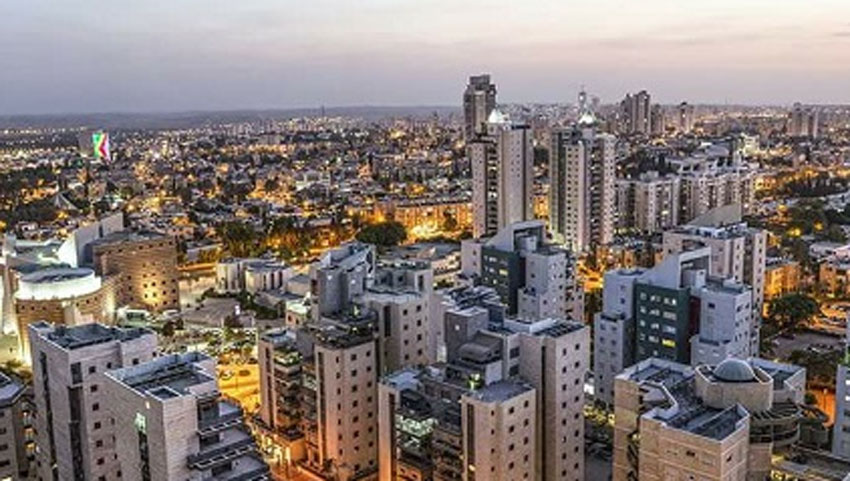
Be’er Sheva is Israel’s fourth-most populated city located in the south near the Negev Desert. The city is a mix of Sephardi, Mizrahi, and Ashkenazi families as well as diverse population of Jews from India, Russia, Ethiopia and now the United States. The game of chess is very popular in Be’er Sheva so much that it’s become Israel’s national chess center, with more chess grandmasters per capita than any other city in the world. Be’er Sheva is also home to Ben-Gurion University of the Negev. This city also serves as a center for Israel’s high-tech and developing technology industry. There is a lot of new construction, schools, shuls of all kinds, modern shopping centers, and walking paths, with low cost housing options.
Carmei Gat
In just a few years, Carmei Gat has become the fastest growing young community for Anglos in Israel. The varied housing options, beautiful spacious environment, cutting-edge new amenities, excellent education, diverse residents and above all, the welcoming community, position Carmei Gat as an unparalleled option for those looking for a new a place to call home. One hour from Jerusalem and 40 Minutes from Tel Aviv with affordable housing, makes Carmei Gat a great place to check out! Join Kim Bash Real Estate and meet Anglo’s living in Carmei Gat and see some exciting new real estate opportunities.
Ir Yamim
Ir Yamim is a large area in the southwestern part of Netanya, built with the sea as its focal point. Proximity to the sea assures its success, according to real estate developers. Netanya is the favorite destination for many overseas residents who want a holiday home in Israel; it is located in the center of the country and is a seaside town. In relation to the total population, Netanya has the largest number of overseas residents. According to rough estimates, it has an overseas population of nearly 9 percent, most of whom have a house or an apartment that they use as a holiday home. Ir Yamim was designed with these people in mind. Its high-standard design and construction has much in common with the modern architectural motifs of Mediterranean seaside towns. Ir Yamim has nature on three sides: to the west, the Mediterranean Sea; to the south, the Poleg Nature Reserve; and to the east, the Irusim Nature Reserve. The buildings are designed so that the maximum number of apartments have sea views. As is typical of a quality development near the sea, the dwellings are not cheap – and they’re not meant to be. The closer an apartment in Ir Yamim is to the seashore, the more it costs.
Harish
Harish is located on green hills close to the Iron interchange on Highway 6, at a height of 110 meters above sea level, and a driving distance of 10 minutes from Pardes Hanna-Karkur.
The city’s origin is in Kibbutz Harish, established in the ’80s and abandoned in the early ’90s .After the kibbutz’ evacuation, the Ministry of Construction and Housing laid down preliminary infrastructure for the development of the city of Harish. Additionally, as part of the plan to unify local authorities, a unified local council was established for the communities of Katzir and Harish, despite the relatively large distance between them.
In recent years, especially after the paving of Highway 6, the region saw a significant increase in the demand for housing among young couples and families, who found a home in the surrounding kibbutzim and the various communities in the Pardes Hanna-Karkur area. Harish’s proximity to Highway 6, its location in the heart of the green Iron hills that enjoy continuous air flow and low humidity levels relative to the coastal plain, created renewed interest in the town’s development.
On September 01, 2016, with the establishment of four primary schools and 20 kindergartens and day care centers, the first year of studies opened in Harish. On September 2018, more than 2,600 children attended the city’s 4 schools and 42 kindergartens. Secondary schools, as well as other schools and kindergartens are expected to open later, following the pace of population growth.
During 2017, the main commercial avenue opened (Derech Eretz Ave.) which today includes a supermarket, a variety of shops, sick fund branches, fast food, cafés and more. During 2021, the number of citizens living in Harish reached 25,000.
As a new city, Harish has become an exceptional solution in Israel for young couples and families looking for quality housing at affordable prices, in close proximity and with accessibility to the center of the country.
Neve Daniel
Neve Daniel is located about 18 kilometers (11 miles) southwest of Jerusalem. It is situated atop one of the highest points in the area, and offers views as far as Tel Aviv to the west and the mountains of Jordan to the east. The settlement is under the administration of the Gush Etzion Regional Council. The population has grown rapidly, and includes Olim from a variety of countries, including a significant percentage of English speakers. The majority of residents are Orthodox, and English speakers generally show a high level of interest in integrating with greater Israeli society.
Modiin
Modi’in-Maccabim-Re’ut is an Israeli city located in central Israel, about 35 kilometres southeast of Tel Aviv and 30 kilometres west of Jerusalem, and is connected to those two cities via Highway 443. In 2019 the population was 93,277.
Modi’in is designed with four major tiers: a residential area, the main business center, an industrial park, and an employment area, all of which are surrounded by greenery. A master plan was drawn for a superbly designed city covering 50 thousand dunams – half in builtup areas and half in green areas. According to the final plan for the city, it is designed to accommodate a population of approximately a quarter of a million inhabitants. The residential neighborhoods are built around the city’s core – the main municipal business center, where the Modi’in Central Railway Station and the Azrieli Modi’in Mall are currently located. In the future, the center will house the municipality building and many public institutions, as well as business and commercial sites. There are also commercial centers located throughout the residential neighborhoods. The city’s cemetery – a final resting place for its local residents – lies near the treetops/trees of the Ben Shemen forest.