
Harish
Harish is located on green hills close to the Iron interchange on Highway 6, at a height of 110 meters above sea level, and a driving distance of 10 minutes from Pardes Hanna-Karkur.
The city’s origin is in Kibbutz Harish, established in the ’80s and abandoned in the early ’90s .After the kibbutz’ evacuation, the Ministry of Construction and Housing laid down preliminary infrastructure for the development of the city of Harish. Additionally, as part of the plan to unify local authorities, a unified local council was established for the communities of Katzir and Harish, despite the relatively large distance between them.
In recent years, especially after the paving of Highway 6, the region saw a significant increase in the demand for housing among young couples and families, who found a home in the surrounding kibbutzim and the various communities in the Pardes Hanna-Karkur area. Harish’s proximity to Highway 6, its location in the heart of the green Iron hills that enjoy continuous air flow and low humidity levels relative to the coastal plain, created renewed interest in the town’s development.
On September 01, 2016, with the establishment of four primary schools and 20 kindergartens and day care centers, the first year of studies opened in Harish. On September 2018, more than 2,600 children attended the city’s 4 schools and 42 kindergartens. Secondary schools, as well as other schools and kindergartens are expected to open later, following the pace of population growth.
During 2017, the main commercial avenue opened (Derech Eretz Ave.) which today includes a supermarket, a variety of shops, sick fund branches, fast food, cafés and more. During 2021, the number of citizens living in Harish reached 25,000.
As a new city, Harish has become an exceptional solution in Israel for young couples and families looking for quality housing at affordable prices, in close proximity and with accessibility to the center of the country.
Rehovot
Rehovot is home to the world famous Weizmann Institute of Science, the Robert H. Smith Faculty of Agriculture, Food & Environment (HUJI) and various hi-tech and biotech businesses that define the character of this “science-centric” modern city. Home to two academic institutes in addition to universities like Bar-Ilan and Tel-Aviv, Rehovot has adopted a young, trendy “University town” vibe. The ongoing influx of visiting academics from abroad helps to infuse the city with a truly international flavor.
A third of the population is religious, and 21% have an academic education. The city has a wonderfully warm Anglo Orthodox community with many shuls and kosher food establishments.
Ramat Beit Shemesh
Ramat Beit Shemesh is a well known Anglo area filled with singles, families and 55+ community members. It’s Shomer Shabbat with people of all religious levels, living together. There is shopping, medical resources and community resources for everyone. You will hear lots of English, Hebrew, Spanish and French spoken on the street.
Netanya
Are you an Oleh or perhaps for looking for a new community in Israel? Let’s talk about Netanya, City Center – for everyone who loves the City & the sea – Netanya could be your next community! Netanya is the largest city in the Sharon area and one of the most beautiful, is a desirable tourist city, rightfully known as “The Israeli Riviera”. Offering green parks and nature reserves, one of the most advanced sports stadiums in Europe, Museums, galleries and a wide range of cultural events. A magnificent 14-km coastal strip boasting 10 well-kept and attractive beaches. The famous “Winter Puddle,” a rare 74-acre nature reserve in an urban landscape. The green and open Iris Reserve, all these make Netanya an attractive real estate and tourist city where its residents enjoy an endless vacation atmosphere. Come and hear what the locals have to say about living in Netanya and learn about an exciting new real estate project – Savyon City, the new luxury tower from famed developers Africa Israel Residence!
Be’er Sheva
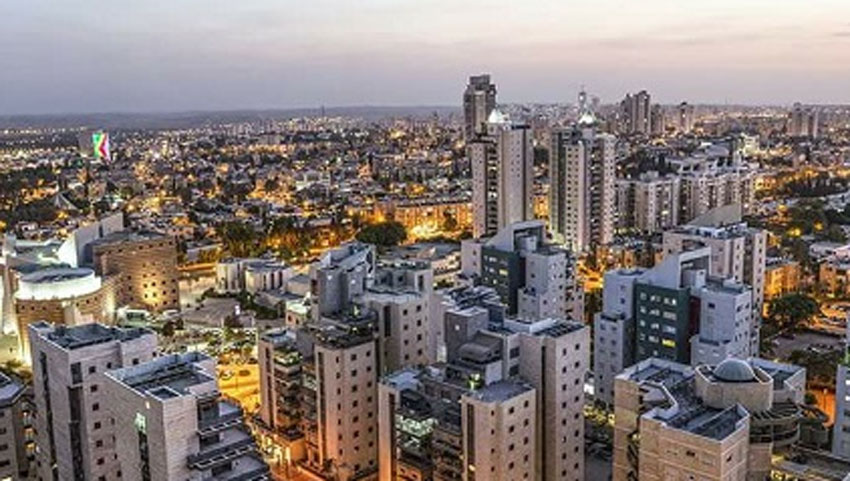
Be’er Sheva is Israel’s fourth-most populated city located in the south near the Negev Desert. The city is a mix of Sephardi, Mizrahi, and Ashkenazi families as well as diverse population of Jews from India, Russia, Ethiopia and now the United States. The game of chess is very popular in Be’er Sheva so much that it’s become Israel’s national chess center, with more chess grandmasters per capita than any other city in the world. Be’er Sheva is also home to Ben-Gurion University of the Negev. This city also serves as a center for Israel’s high-tech and developing technology industry. There is a lot of new construction, schools, shuls of all kinds, modern shopping centers, and walking paths, with low cost housing options.
Zichron Yaakov
Zichron Yaakov is located upon Mount Carmel, with magnificent views across the Coastal Plain to the Mediterranean. It is a tranquil town, offering breathtaking views across Israel’s Mediterranean Coast and beyond. Zichron’s main street, known as Midrahov, is now a pedestrianized zone lined with cafes and boutique artistic stores. Being the original street of the settlement, many of the houses are of great historic value and have plaques outside that tell the story. Zichron Yaakov is also home to the Carmel, Tishbi and Binyamina wineries who also have visitor centers, which bring lots of tourists during ”normal” times. Besides beautiful homes, Zichron also has wonderful neighborhoods, good schools, shuls, and proximity to places of employment. Zichron has a vibrant community with a healthy diverse mix of people. Olim feel a sense of fitting in the community almost immediately upon arrival. There is also a Haredi community split into two areas, Hazon Ish and Ramat Tzvi, which both have English-speaking families.