
Be’er Sheva
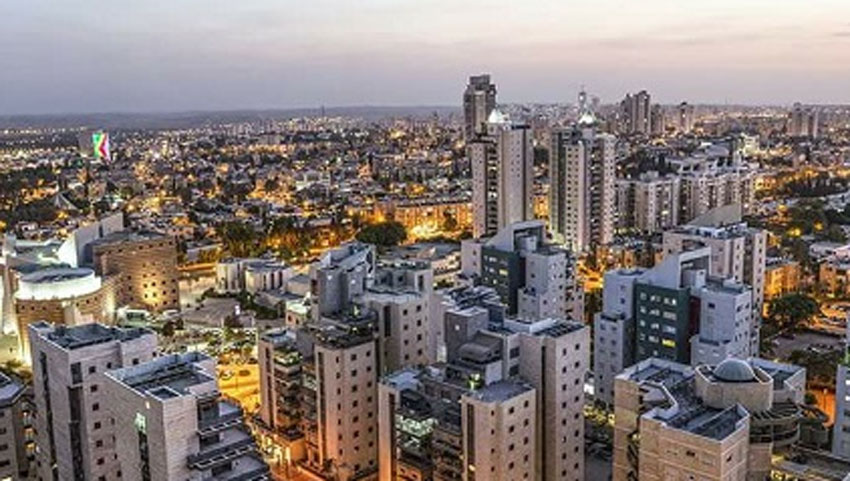
Be’er Sheva is Israel’s fourth-most populated city located in the south near the Negev Desert. The city is a mix of Sephardi, Mizrahi, and Ashkenazi families as well as diverse population of Jews from India, Russia, Ethiopia and now the United States. The game of chess is very popular in Be’er Sheva so much that it’s become Israel’s national chess center, with more chess grandmasters per capita than any other city in the world. Be’er Sheva is also home to Ben-Gurion University of the Negev. This city also serves as a center for Israel’s high-tech and developing technology industry. There is a lot of new construction, schools, shuls of all kinds, modern shopping centers, and walking paths, with low cost housing options.
Elezar
Elazar is a town located near Efrat in the Judean Mountains with a population of 350 families.
Tel Mond
Founded over 80 years ago, Tel Mond has developed into a unique suburb with both religious and secular residents. Located in the heart of the Sharon region, Tel Mond is home to a vibrant and active Anglo community. Residents of Tel Mond benefit from being only kilometers away from high-tech job opportunities, shopping centers, and the beach, while also being able to enjoy the calm and luxury of living in a suburban community. Commutable to Tel Aviv and Netanya makes this a very attractive location.
Maalot
Looking for your home in Israel and considering the north? Maalot, located 20 minutes east of Nahariya, has a warm Anglo, Torani commuity with affordable homes and new building projects. Hear from the locals including Marci Eskenazi our new Real Estate Broker and her husband David from Aliyah Network, all about the community! Schedule a Real Estate overview to find out what’s possible.
Ramot Bet
In addition to being one of the biggest neighborhoods in Jerusalem, Ramot (Hebrew for “heights”) is also one of the most diverse. The six sections of Ramot differ wildly from one another, just as the 40,000 people who live there come from a wide variety of backgrounds. What they share is the panoramic view, because Ramot was built hundreds of meters above sea level. Ramot is one of the newer Jerusalem neighborhoods, as construction first began in the 1970s. The different sections of Ramot were built by different architects and for differing purposes. Ramot Aleph (or Ramot One) was built for families of moderate income. The result is an area of attached, tiered apartment buildings, which together resemble a giant beehive.
Residents of these apartments tend to be Orthodox Jews with large families, even though the apartments themselves are not that big. In sharp contrast, Ramot Bet (Ramot Two) boasts rows of spacious private homes. Living in a private house, and in particular an unattached house, is a luxury in Jerusalem, where the majority of people live in apartments.
Ramot Bet is therefore known as a prosperous neighborhood, populated mainly with a mix of Modern Orthodox and secular Jews. Many English-speaking immigrants choose to live in Ramot Bet, since the lifestyle is similar to that which they left behind. The remaining four neighborhoods of Ramot present variations of the spectrum between these two extremes.
Ramot Six, for example, is comprised of private homes, but most of these are attached and not as large as the houses in Ramot Bet.
Harish
Harish is located on green hills close to the Iron interchange on Highway 6, at a height of 110 meters above sea level, and a driving distance of 10 minutes from Pardes Hanna-Karkur.
The city’s origin is in Kibbutz Harish, established in the ’80s and abandoned in the early ’90s .After the kibbutz’ evacuation, the Ministry of Construction and Housing laid down preliminary infrastructure for the development of the city of Harish. Additionally, as part of the plan to unify local authorities, a unified local council was established for the communities of Katzir and Harish, despite the relatively large distance between them.
In recent years, especially after the paving of Highway 6, the region saw a significant increase in the demand for housing among young couples and families, who found a home in the surrounding kibbutzim and the various communities in the Pardes Hanna-Karkur area. Harish’s proximity to Highway 6, its location in the heart of the green Iron hills that enjoy continuous air flow and low humidity levels relative to the coastal plain, created renewed interest in the town’s development.
On September 01, 2016, with the establishment of four primary schools and 20 kindergartens and day care centers, the first year of studies opened in Harish. On September 2018, more than 2,600 children attended the city’s 4 schools and 42 kindergartens. Secondary schools, as well as other schools and kindergartens are expected to open later, following the pace of population growth.
During 2017, the main commercial avenue opened (Derech Eretz Ave.) which today includes a supermarket, a variety of shops, sick fund branches, fast food, cafés and more. During 2021, the number of citizens living in Harish reached 25,000.
As a new city, Harish has become an exceptional solution in Israel for young couples and families looking for quality housing at affordable prices, in close proximity and with accessibility to the center of the country.