
Elezar
Elazar is a town located near Efrat in the Judean Mountains with a population of 350 families.
Haifa
Haifa is Israel’s third-largest city, beautifully set on the slopes of Mount Carmel facing the Mediterranean Sea. There are a number of great things to do, including the Bahai Gardens, German Colony, as well as a number of top museums. The city is part of Israel’s so-called “Silicon Wadi”. High-tech companies around the Matam technology park, where Google, Apple and IBM have offices. Popular among English speaking olim are the neighborhoods of Ahuzza, Upper Hadar and Neve Shaanan. Ahuzza areas are fairly affluent neighborhoods and are home to both religious and secular communities. Near to Haifa University, makes this area desirable to international students and expats who make this neighborhood their home. The Upper Hadar is situated halfway between The Central Carmel neighborhood and the Hadar shopping district. Property prices are lower and all major bus routes, the Carmelit route and in close walking distance to shopping, this is an ideal location if you do not have your own car. The Upper Hadar offers wonderful views of Haifa Port, the bay and Galilee. Neve Shaanan is a large residential and commercial center with a selection of suburban shops, supermarkets and restaurants. This area is a very popular choice for English speaking, young immigrant, observant Jewish couples. Join Devorah Benarroch from KIm Bash Real Estate to meet some Anglo’s who are now living in Haifa, Israel. Community & Real Estate information, by Kim Bash
Tzfat
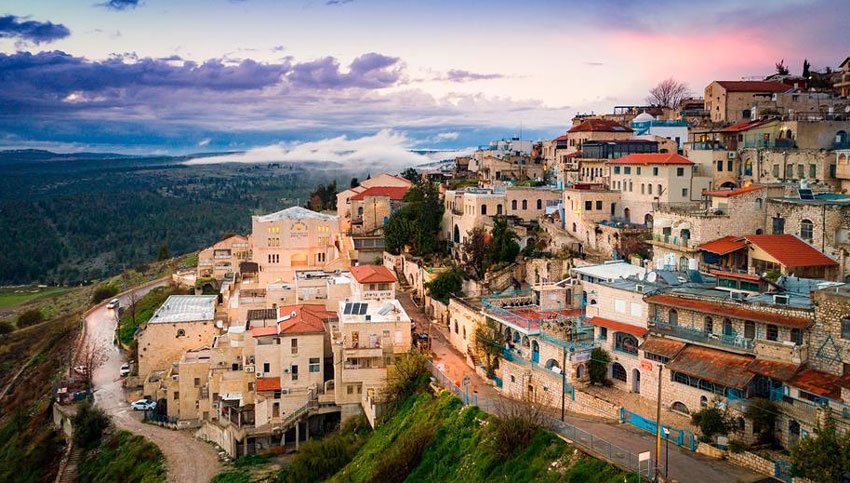
Tzfat is not only one of Israel’s holiest cities, it is also the highest city in the Holy Land. Set in the dense pine forests of the Upper Galilee, overlooking Tiberias and the Sea of Galilee, Tzfat is a delicious blend of ancient grandeur and modern-day resort. For thousands of years, the ancient city of Safed was conquered and reconquered – always changing hands. Said to have been founded by one of Noah’s sons after the Great Flood, the city was inhabited by the local Semetic populations throughout the years. Josephus mentions Tzfat as Sepph, a fortified Jewish town in the Upper Galilee. Today, after years of conflict ranging from the Crusaders to the Mamlukes to the British, Tzfat survives – as pretty, vibrant and mystical as ever!
Pardes Chana
It’s not exactly in the north of the country, nor in the center. Maybe that’s what makes Pardes Channa in the northern Sharon region a place where each person can be whatever he or she wants. On the one hand, the town has filled up in recent years with city people from Tel Aviv, Ramat Hasharon and other cities in central Israel who came here for the dream of a country home, a garden and a family dog—despite the early morning traffic jams on Israel’s coastal road. On the other hand, Pardes Hanna has become a place for beatniks and artists who have discovered a place to create, to launch initiatives, and enjoy a rich community life. Amid this modern-day influx, let’s not forget the veterans of ‘Moshava HaYekkim’ (1929), who grew up under the patronage of Baron de Hirsch (“The Known Benefactor”), and of Karkur (1913), who preserved the character of Arab landholders from the Ottoman period. Here we see a dynamic mix of old and new, longstanding and new young residents, artists and common people. Something in this human patchwork seems to be going quite well. This town with its seemingly endless tiny roads and its 43,000 residents somehow still refuses to become a city. Maybe it’s due to the prestige of remaining a ‘local council’, or maybe due to the bureaucracy involved.One way or another, Pardes Channa (named for Hannah Rothschild, the niece of Baron de Hirsch) is marking 90 years since its founding and 50 years since its union with Karkur in 1959. “So why does everyone call it “Pardes Canna” rather than “Pardes Channa-Karkur”? Irit Oren, director of the Veteran’s House, explains: Both communities have strong sentiments for their past and neither wants to surrender its classic name. Pardes Channa was once considered the “spoiled younger sister” due to the philanthropy of the Baron while Karkur’s roots go back to an English association founded on capital and entrepreneurship that, surprisingly, succeeded during hard times in Israel. Neither really wanted the other, but just like today’s political rivals in Israel they understood that two is stronger than one.
Maalot
Looking for your home in Israel and considering the north? Maalot, located 20 minutes east of Nahariya, has a warm Anglo, Torani commuity with affordable homes and new building projects. Hear from the locals including Marci Eskenazi our new Real Estate Broker and her husband David from Aliyah Network, all about the community! Schedule a Real Estate overview to find out what’s possible.
Carmei Gat
In just a few years, Carmei Gat has become the fastest growing young community for Anglos in Israel. The varied housing options, beautiful spacious environment, cutting-edge new amenities, excellent education, diverse residents and above all, the welcoming community, position Carmei Gat as an unparalleled option for those looking for a new a place to call home. One hour from Jerusalem and 40 Minutes from Tel Aviv with affordable housing, makes Carmei Gat a great place to check out! Join Kim Bash Real Estate and meet Anglo’s living in Carmei Gat and see some exciting new real estate opportunities.