
Maalot
Looking for your home in Israel and considering the north? Maalot, located 20 minutes east of Nahariya, has a warm Anglo, Torani commuity with affordable homes and new building projects. Hear from the locals including Marci Eskenazi our new Real Estate Broker and her husband David from Aliyah Network, all about the community! Schedule a Real Estate overview to find out what’s possible.
Tzfat
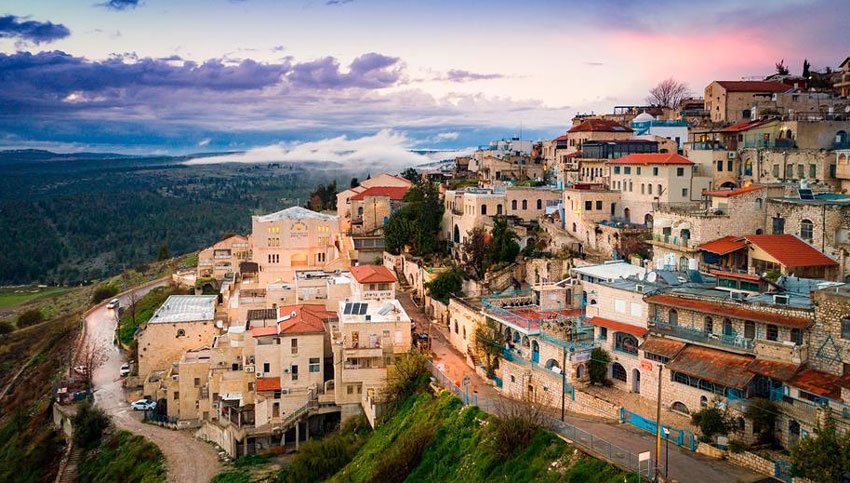
Tzfat is not only one of Israel’s holiest cities, it is also the highest city in the Holy Land. Set in the dense pine forests of the Upper Galilee, overlooking Tiberias and the Sea of Galilee, Tzfat is a delicious blend of ancient grandeur and modern-day resort. For thousands of years, the ancient city of Safed was conquered and reconquered – always changing hands. Said to have been founded by one of Noah’s sons after the Great Flood, the city was inhabited by the local Semetic populations throughout the years. Josephus mentions Tzfat as Sepph, a fortified Jewish town in the Upper Galilee. Today, after years of conflict ranging from the Crusaders to the Mamlukes to the British, Tzfat survives – as pretty, vibrant and mystical as ever!
Rehovot
Rehovot is home to the world famous Weizmann Institute of Science, the Robert H. Smith Faculty of Agriculture, Food & Environment (HUJI) and various hi-tech and biotech businesses that define the character of this “science-centric” modern city. Home to two academic institutes in addition to universities like Bar-Ilan and Tel-Aviv, Rehovot has adopted a young, trendy “University town” vibe. The ongoing influx of visiting academics from abroad helps to infuse the city with a truly international flavor.
A third of the population is religious, and 21% have an academic education. The city has a wonderfully warm Anglo Orthodox community with many shuls and kosher food establishments.
Harish
Harish is located on green hills close to the Iron interchange on Highway 6, at a height of 110 meters above sea level, and a driving distance of 10 minutes from Pardes Hanna-Karkur.
The city’s origin is in Kibbutz Harish, established in the ’80s and abandoned in the early ’90s .After the kibbutz’ evacuation, the Ministry of Construction and Housing laid down preliminary infrastructure for the development of the city of Harish. Additionally, as part of the plan to unify local authorities, a unified local council was established for the communities of Katzir and Harish, despite the relatively large distance between them.
In recent years, especially after the paving of Highway 6, the region saw a significant increase in the demand for housing among young couples and families, who found a home in the surrounding kibbutzim and the various communities in the Pardes Hanna-Karkur area. Harish’s proximity to Highway 6, its location in the heart of the green Iron hills that enjoy continuous air flow and low humidity levels relative to the coastal plain, created renewed interest in the town’s development.
On September 01, 2016, with the establishment of four primary schools and 20 kindergartens and day care centers, the first year of studies opened in Harish. On September 2018, more than 2,600 children attended the city’s 4 schools and 42 kindergartens. Secondary schools, as well as other schools and kindergartens are expected to open later, following the pace of population growth.
During 2017, the main commercial avenue opened (Derech Eretz Ave.) which today includes a supermarket, a variety of shops, sick fund branches, fast food, cafés and more. During 2021, the number of citizens living in Harish reached 25,000.
As a new city, Harish has become an exceptional solution in Israel for young couples and families looking for quality housing at affordable prices, in close proximity and with accessibility to the center of the country.
Elezar
Elazar is a town located near Efrat in the Judean Mountains with a population of 350 families.
Neve Daniel
Neve Daniel is located about 18 kilometers (11 miles) southwest of Jerusalem. It is situated atop one of the highest points in the area, and offers views as far as Tel Aviv to the west and the mountains of Jordan to the east. The settlement is under the administration of the Gush Etzion Regional Council. The population has grown rapidly, and includes Olim from a variety of countries, including a significant percentage of English speakers. The majority of residents are Orthodox, and English speakers generally show a high level of interest in integrating with greater Israeli society.