
Ashkelon
Ashkelon is one of the most highly regarded cities in Israel, with roughly 149,000 residents and a population is that is constantly growing. This dynamic city boasts a high quality of life, with excellent educational institutions, rich and varied leisure activities for the entire population with many recreation spots located around the city. Ashkelon is just south of Ashdod and about one hour’s drive from Jerusalem. You’ll find a beautiful Sea Park located on Delilah Beach, next to the marina with its new large commercial center, cinema, cafés, and restaurants. In Tel Ashkelon National Park, you can enjoy an entertainment and camping experience with a view of the Mediterranean Sea. Ashkelon is a place where past and present blend perfectly into a modern, groundbreaking and progressive city, with a blended mix of Jews at all levels living together. This warm and wonderful community will always welcome you. Living in a beautiful city, inside and out make Ashkelon a place that it’s easy to fall in love with.
Modiin
Modi’in-Maccabim-Re’ut is an Israeli city located in central Israel, about 35 kilometres southeast of Tel Aviv and 30 kilometres west of Jerusalem, and is connected to those two cities via Highway 443. In 2019 the population was 93,277.
Modi’in is designed with four major tiers: a residential area, the main business center, an industrial park, and an employment area, all of which are surrounded by greenery. A master plan was drawn for a superbly designed city covering 50 thousand dunams – half in builtup areas and half in green areas. According to the final plan for the city, it is designed to accommodate a population of approximately a quarter of a million inhabitants. The residential neighborhoods are built around the city’s core – the main municipal business center, where the Modi’in Central Railway Station and the Azrieli Modi’in Mall are currently located. In the future, the center will house the municipality building and many public institutions, as well as business and commercial sites. There are also commercial centers located throughout the residential neighborhoods. The city’s cemetery – a final resting place for its local residents – lies near the treetops/trees of the Ben Shemen forest.
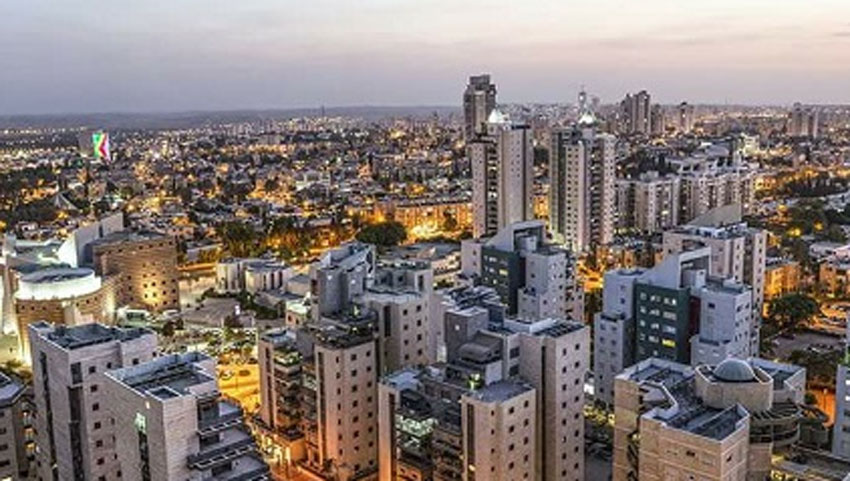
Be’er Sheva
Be’er Sheva is Israel’s fourth-most populated city located in the south near the Negev Desert. The city is a mix of Sephardi, Mizrahi, and Ashkenazi families as well as diverse population of Jews from India, Russia, Ethiopia and now the United States. The game of chess is very popular in Be’er Sheva so much that it’s become Israel’s national chess center, with more chess grandmasters per capita than any other city in the world. Be’er Sheva is also home to Ben-Gurion University of the Negev. This city also serves as a center for Israel’s high-tech and developing technology industry. There is a lot of new construction, schools, shuls of all kinds, modern shopping centers, and walking paths, with low cost housing options.
Netanya
Are you an Oleh or perhaps for looking for a new community in Israel? Let’s talk about Netanya, City Center – for everyone who loves the City & the sea – Netanya could be your next community! Netanya is the largest city in the Sharon area and one of the most beautiful, is a desirable tourist city, rightfully known as “The Israeli Riviera”. Offering green parks and nature reserves, one of the most advanced sports stadiums in Europe, Museums, galleries and a wide range of cultural events. A magnificent 14-km coastal strip boasting 10 well-kept and attractive beaches. The famous “Winter Puddle,” a rare 74-acre nature reserve in an urban landscape. The green and open Iris Reserve, all these make Netanya an attractive real estate and tourist city where its residents enjoy an endless vacation atmosphere. Come and hear what the locals have to say about living in Netanya and learn about an exciting new real estate project – Savyon City, the new luxury tower from famed developers Africa Israel Residence!
Pardes Chana
It’s not exactly in the north of the country, nor in the center. Maybe that’s what makes Pardes Channa in the northern Sharon region a place where each person can be whatever he or she wants. On the one hand, the town has filled up in recent years with city people from Tel Aviv, Ramat Hasharon and other cities in central Israel who came here for the dream of a country home, a garden and a family dog—despite the early morning traffic jams on Israel’s coastal road. On the other hand, Pardes Hanna has become a place for beatniks and artists who have discovered a place to create, to launch initiatives, and enjoy a rich community life. Amid this modern-day influx, let’s not forget the veterans of ‘Moshava HaYekkim’ (1929), who grew up under the patronage of Baron de Hirsch (“The Known Benefactor”), and of Karkur (1913), who preserved the character of Arab landholders from the Ottoman period. Here we see a dynamic mix of old and new, longstanding and new young residents, artists and common people. Something in this human patchwork seems to be going quite well. This town with its seemingly endless tiny roads and its 43,000 residents somehow still refuses to become a city. Maybe it’s due to the prestige of remaining a ‘local council’, or maybe due to the bureaucracy involved.One way or another, Pardes Channa (named for Hannah Rothschild, the niece of Baron de Hirsch) is marking 90 years since its founding and 50 years since its union with Karkur in 1959. “So why does everyone call it “Pardes Canna” rather than “Pardes Channa-Karkur”? Irit Oren, director of the Veteran’s House, explains: Both communities have strong sentiments for their past and neither wants to surrender its classic name. Pardes Channa was once considered the “spoiled younger sister” due to the philanthropy of the Baron while Karkur’s roots go back to an English association founded on capital and entrepreneurship that, surprisingly, succeeded during hard times in Israel. Neither really wanted the other, but just like today’s political rivals in Israel they understood that two is stronger than one.
Carmei Gat
In just a few years, Carmei Gat has become the fastest growing young community for Anglos in Israel. The varied housing options, beautiful spacious environment, cutting-edge new amenities, excellent education, diverse residents and above all, the welcoming community, position Carmei Gat as an unparalleled option for those looking for a new a place to call home. One hour from Jerusalem and 40 Minutes from Tel Aviv with affordable housing, makes Carmei Gat a great place to check out! Join Kim Bash Real Estate and meet Anglo’s living in Carmei Gat and see some exciting new real estate opportunities.