
Israel’s Housing Supply Is at an All-Time High. Why Is Buying Still So Expensive?
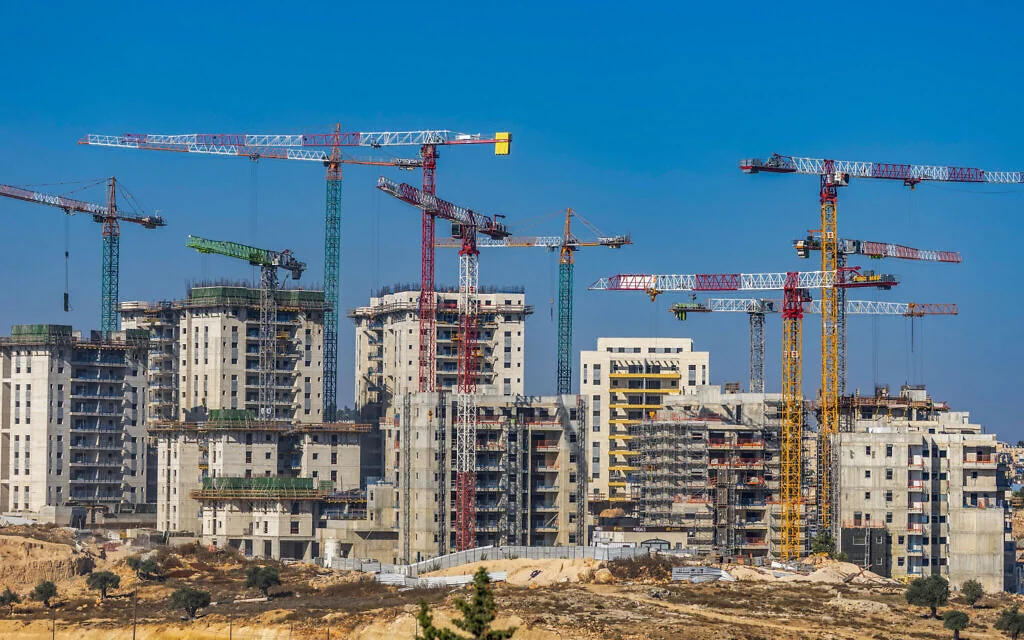
Walk through almost any Israeli city and you will see construction cranes everywhere. Despite more than three years of war, official data shows more new housing is being built than ever before. Yet according to the Central Bureau of Statistics (CBS), home prices are down only 1.8% over the past year and still sit near record highs.
03/11/2026
With this much supply, why aren’t prices dropping? A recent Times of Israel report by Zev Stub asked economists and real estate professionals. Here is what they said.
The Supply Numbers
- More than 85,000 new homes are currently for sale in Israel, at various stages of construction, an all-time high according to the CBS.
- About 46,000 of them (55%) are in Tel Aviv and the central region, and about 10,000 (12%) are in Jerusalem.
- At the current pace of sales, the CBS says it would take about two and a half years to sell them all.
Dani Ben Shahar, head of Tel Aviv University’s Alrov Institute for Real Estate Research, says these figures should be taken with a grain of salt. It is not clear at exactly what stage of development a unit gets counted. Much of the inventory is in early construction and may not be livable for years.
Jerusalem agent Nachi Paris says most of it is presales of apartments that do not exist yet. In Jerusalem, he says, fewer than 100 apartments are available in buildings people can move into soon, and projects that are three or four years from completion are already about 50% sold.
Tel Aviv and the center look different. Agents there say supply is outpacing demand, and cities like Yehud-Monosson, Lod, Kiryat Gat and Bat Yam are also seen as having a surplus.
The Discounts You Don’t See
The CBS says prices in Tel Aviv fell by nearly 2% over the past year. But agents say some developers are quietly cutting prices by 10% or more. Eran Rolls, head of the Israel Building Center, says discounts often come as generous financing or upgrades like a better kitchen, worth around 10% of the price. He says many developers in the center have to offer them or they will struggle to survive.
Hebrew University economist David Genesove notes that the 1.8% drop is about 4.5% in real terms after inflation. These figures leave out the private discounts, so insiders say the real drop is probably somewhat larger. Prices are still up about 7% since October 7, 2023, according to the CBS.
Why Prices Stay High
The experts pointed to several forces:
- Seller psychology. Ben Shahar says owners hate to lower their asking price, and people anchor to what a neighbor or friend sold for. Secondhand sellers usually do not sell unless they have to.
- The government’s share. Rolls says the state collects about half to two thirds of the price of every new apartment through land sales, VAT and other taxes, so it has an interest in prices staying high.
- Bank rules. Developers need a bank-approved appraisal that sets a minimum price per square meter. A 2025 regulatory committee led by Prof. Avi Simchon found that banks could use this to stop struggling developers from selling lower. The Bank of Israel then barred banks from dictating or restricting the price of individual apartments. Experts are split on how much this has changed things.
- How real estate behaves. Ben Shahar says research shows that when prices fall, sales volume often falls too, and rising prices can attract more buyers and investors.
Rates and the Shekel
Some pressures have eased. The shekel has weakened since hitting a 30-year peak in May and now trades around NIS 3.10 to the dollar. The Bank of Israel cut its rate to a four-year low of 3.25% in September. Even so, prices dropped 0.6% in July and August, the latest period measured by the CBS.
What Comes Next
Genesove says the outcome depends on the economy, demographics and government policy. Israel’s fertility rate is among the highest in the Western world, so building will need to keep pace, and the question is whether enough land gets released.
Rolls believes foreign buyers will be a big factor. He says rising antisemitism is pushing Jews abroad to buy in Israel, but that more of them are needed. In his view, prices are falling in Tel Aviv but will “certainly” keep rising in the historic neighborhoods of Jerusalem. He says good deals can still be found in places like Netanya, Sderot and Ashkelon.
Paris says buyers who wait for a better deal often end up paying more three years later, and he calls many of the warnings overblown.
The Bottom Line
On one point the experts agreed. Anyone planning to wait for a sudden price drop should not count on it. As Ben Shahar put it, you can never know when something is a bubble until after it bursts.
Source: Zev Stub, The Times of Israel, October 30, 2026. Read the original article here.