
133 Old Jerusalem Apartments Are Making Way for 390 New Ones
A quiet street in Jerusalem’s Rasco neighborhood is about to undergo a dramatic transformation. Three urban renewal projects are advancing simultaneously on Tchernichovsky Street, and the first has just received final approval.
20/10/2026
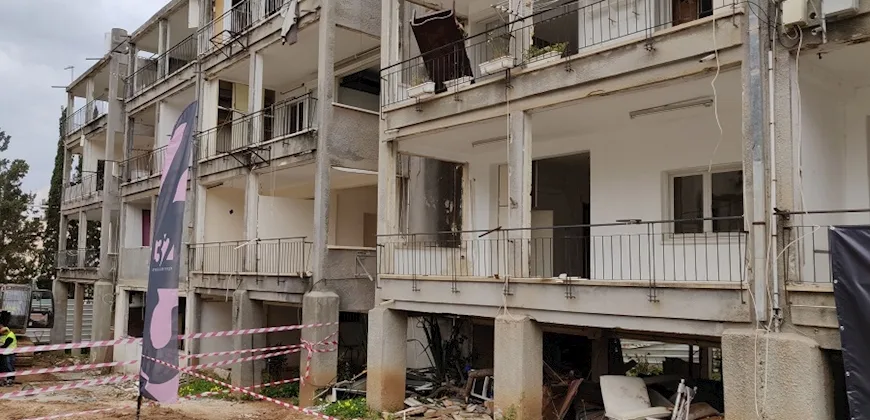
Developer Levenstein Group received sign-off from the District Urban Renewal Committee to replace 42 old apartments in three four-story buildings with approximately 130 new apartments across three buildings of 8 to 11 floors. The 3.5-dunam site at the corner of Tchernichovsky and Dov Kamchi Streets will also include around 300 square meters of commercial space, 440 square meters of public facilities and a small urban garden.
Existing residents will receive new apartments with a safe room, a 12 square meter balcony, a storage unit and parking. Levenstein says it already holds the required majority of resident signatures and is working toward a building permit, which it expects to receive within two years.
Two More Projects on the Same Street
The other two projects on Tchernichovsky Street are one planning step behind but moving in the same direction.
Developer Minrav Real Estate is advancing a plan at numbers 21 to 29, covering about 5 dunams, where 48 apartments will be demolished and replaced by 134 new ones across five seven-story buildings. The estimated investment is around NIS 300 million.
A third project, by Hachshara Urban Renewal in partnership with Tchernichovsky Renewal, covers numbers 74 to 80 and will replace 43 apartments with 125 new ones across six buildings, two of which will be nine floors. The committee required the project to meet a four-star green building standard and set zero setback lines so buildings sit directly on the street edge rather than set back into the plot. Ground floor commercial space facing the street is also included.
The Bigger Picture
Taken together, all three projects will replace 133 old apartments with roughly 390 new ones on a single street. The ratio of roughly three new apartments for every one demolished is what makes urban renewal financially viable — the developer funds demolition, construction and temporary housing for residents through the sale of the additional units.
This is part of a broader wave of urban renewal across Jerusalem. The city is currently advancing 1,430 new apartments through five separate renewal projects, and the District Planning Committee recently approved plans for a further 2,000 apartments in the city center.
Source: Anat Gilad, Bizportal, October 19, 2026. Read the original article here.