
Carmei Gat Is the Next Big Thing for Anglo Olim
Five years ago, barely anyone in the Anglo community had heard of Carmei Gat. Today it is one of the fastest growing destinations for English-speaking olim in Israel, and the numbers back it up. Over 300 Anglo families now call it home, with more than 100 moving there in the past year alone according to Nefesh B’Nefesh.
12/08/2026
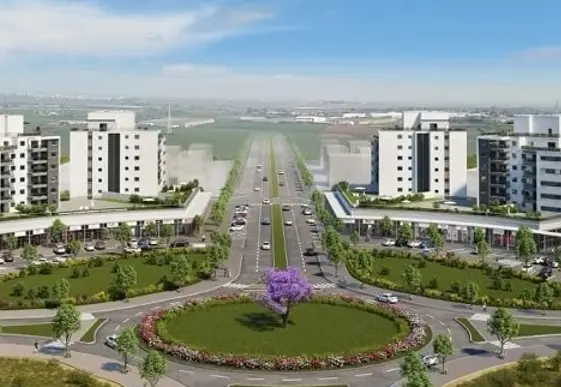
The draw is simple. For significantly less than the price of a comparable apartment in Beit Shemesh or Modiin, families are finding large, modern homes in a tight-knit national religious community with shuls, schools, shopping centers and English-speaking professionals already in place.
How It Started
Carmei Gat was established in 2017 on former farmland just north of Kiryat Gat, separated from the older city by Route 35. It was actually the first neighborhood in Israel to be planned using a comprehensive umbrella agreement model, meaning housing, schools, parks, shops and transportation were all designed together from the start. That model has since been replicated in over 30 municipalities across the country.
Land was cheap because of the location — about 45 kilometers from both Tel Aviv and Beersheba. But a small group of forward-thinking Anglo buyers saw the opportunity early, connected with the local mayor, and helped establish Carmei Tzion synagogue as a community anchor. The rest followed.
“You build a community around the shul and the rest follows,” said Deborah Michael, a real estate agent specializing in Carmei Gat. “It has gotten to the point where people are choosing smaller apartments near Carmei Tzion over bigger apartments further away at the same price.”
What It Looks Like Today
Carmei Gat is home to over 30,000 residents. The main commercial strip on Lachish Street is lined with shopping centers, supermarkets, restaurants, health clinics and offices. There are three malls in the neighborhood, including a large open-air center with a Rami Levy supermarket. The central Sportek park offers sports fields, playgrounds, a skate park, climbing walls and ninja facilities. Streets are wide, tree-lined and well maintained, with underground cables and extensive walking and cycling paths.
“It feels like a yishuv — a close-knit community — with the amenities of a city,” Michael said.
The neighborhood is almost entirely national religious, spanning a wide range of religious observance, and has matured noticeably since its early days. Families that arrived in their twenties are now in their late twenties and thirties, and parents and grandparents are increasingly following their children to the neighborhood.
The Prices
This is where Carmei Gat really stands out. According to local agents, the average three-bedroom secondhand apartment sells for around NIS 2.2 million. A large five-bedroom goes for around NIS 3 million, and a garden apartment for around NIS 3.5 million. Those figures are 20 to 40% lower than comparable properties in Beit Shemesh and Modiin, and well under half the price of popular Anglo neighborhoods in Jerusalem like Katamon and Rehavia.
For those looking for more space, duplex and triplex homes are available, and larger single-family villas typically sell for around NIS 7 million.
Early buyers have already seen strong returns. One Anglo family who purchased a penthouse for NIS 1.9 million in 2021 sold it four years later for close to double that amount.
Getting Around
Location comes up in every conversation about Carmei Gat. It is not close to Jerusalem or Tel Aviv by Israeli standards. But residents point to a train connecting Kiryat Gat to employment centers in both Tel Aviv and Beersheba, and a new train station currently under construction in the northern part of the city. By car, Tel Aviv is under an hour, Jerusalem around an hour, Ashkelon beach about 30 minutes and Beersheba 35 minutes.
What Is Coming Next
A new northern section of Carmei Gat is already under development, with around 6,000 additional apartments planned. Further expansion to the east and west is also being advanced by the Israel Land Authority, potentially adding as many as 30,000 more units over time.
Local agents caution that buyers should not assume the newer sections will automatically have the same communal feel as the established neighborhood. The Anglo community is concentrated in the existing core, and that may take time to replicate further out.
“People originally came here for the prices,” said Michael. “Now they are staying for the community.”
Source: Zev Stub, The Times of Israel, August 9, 2026. Read the original article here.